Gardener Wembley: Recycling and Sustainability for Green Grounds
 Gardener Wembley is committed to creating an eco-friendly waste disposal area and a robust, sustainable rubbish gardening area across all sites we service in and around the Wembley community. Our approach balances practical garden maintenance with clear environmental responsibility: reducing landfill, increasing reuse and recycling, and promoting low-carbon operations. Whether you refer to us as a Wembley gardening recycling service, a local green-care partner, or simply a waste-conscious gardener, our plans are designed to fit local borough systems and community needs.
We work with local civic policies and adopt the borough's approach to waste separation where possible: separating dry recycling, food waste, garden green waste and residual waste. This integrated recycling model aligns the garden waste stream with kerbside collections and community transfer options, so green cuttings and soft wood can be diverted from general waste into productive reuse streams. Our aim is to make the eco-friendly waste disposal area a standard part of every job, not an optional add-on.
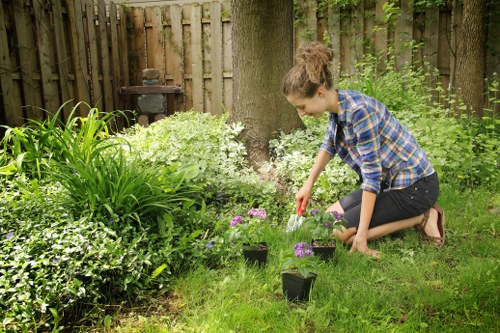 Beyond removal, our focus is on circular outcomes: shredding branches for mulch, separating topsoil for reuse, and segregating recyclable containers and plastics. These actions support a sustainable rubbish gardening area that complements the wider borough recycling strategy and encourages household-level separation where clients want joint solutions. We reference local recycling guidance and adapt to changes in municipal policy so that our Wembley eco-friendly waste disposal practices remain compliant and effective.
Our measurable targets are central to long-term improvement. We have set a recycling percentage target of 65% of all collected waste to be diverted from landfill by the end of 2028, rising to 75% by 2032 as processes mature and partnerships expand. These targets are tracked through monthly audits and reporting, and we use them to guide investments in equipment, staff training and client communications. Achieving these metrics positions Gardener Wembley as a leader in sustainable gardening and waste reduction in the area.
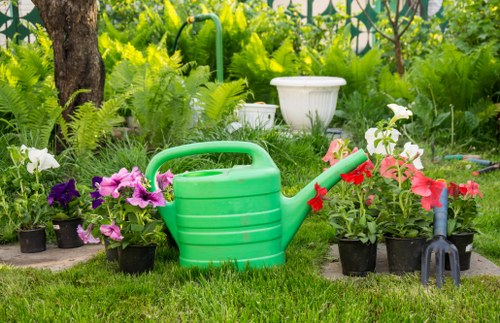 In practice, a sustainable rubbish gardening area includes designated sorting zones on-site or at our depots, clear labelling, and temporary containment for green waste destined for composting or anaerobic digestion. We do not provide step-by-step gardening guides, but we do implement operational best practices to minimize contamination of recycling streams. This ensures that materials making their way to municipal collections or private processors meet the borough's sorting expectations and avoid rejection at transfer stations.
Local transfer stations and civic amenity sites play a vital role in our logistics. We coordinate collections with nearby municipal facilities and private consolidation centres, using authorised transfer stations in and around the borough to keep loads moving efficiently. These local transfer stations shorten haul distances, reduce double-handling, and help maintain higher recovery rates for woody debris, earth, stone and recyclable packaging from garden projects. Working within this network supports a resilient, lower-impact eco-friendly waste disposal area.
Partnerships amplify impact. Gardener Wembley has established collaborations with local charities and redistribution organisations to ensure reusable items are diverted from the waste stream:
- Furniture and timber reuse charities for structurally sound wooden materials.
- Food redistribution and community food programmes for surplus edible produce from allotments and community gardens.
- Clothing and textiles charities for textile materials encountered during clearances.
- Community garden projects and environmental groups that accept mulch, compost and topsoil for local green spaces.
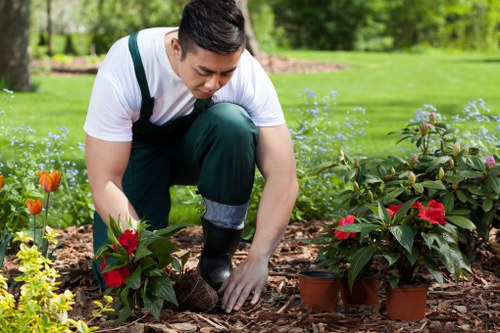 We prioritise partnerships with organisations that operate within the borough to keep social and environmental benefits local. These collaborations help us create a circular economy loop: materials recovered from garden clearance and maintenance are reused for community projects, training schemes and charitable redistribution, supporting social value as well as material recovery.
 Low-carbon transport is another core pillar of our sustainability plan. Our fleet includes electric vans and low-emission hybrid vehicles, and we are gradually retrofitting to zero-emission light commercial vehicles where infrastructure allows. Route optimisation software reduces mileage and idling time, while coordinated drop-off to nearby transfer stations further cuts down CO2 emissions. When necessary, we also operate small, fuel-efficient trailers for short-distance loads to preserve air quality and reduce noise in residential streets.
Sustainable Operations and Community Integration
Gardener Wembley emphasises transparency: regular reporting on recycling rates, carbon reductions from our low-carbon vans, and the volume of materials redirected to charities are shared internally and with partner organisations. We maintain clear records to ensure accountability against our recycling percentage target and to verify that the eco-friendly waste disposal area services are delivering measurable environmental outcomes.
Why this matters to Wembley
Localised action on waste and gardening supports broader climate goals and helps borough services meet municipal recycling ambitions. By integrating garden-focused recycling with the borough's waste separation systems, Gardener Wembley helps residents and organisations turn garden waste from a disposal problem into a resource for soil health, community projects and reused materials. Our combined focus on a sustainable rubbish gardening area, charity partnerships and a low-carbon fleet exemplifies a practical route to greener urban gardening.
In summary, our multi-faceted approach—clear targets, smart logistics, local transfer station use, charity partnerships and low-emission vehicles—creates a resilient model for recycling and sustainability in Wembley and neighbouring communities. Gardener Wembley continues to refine operations to meet rising standards and community expectations while keeping the gardens we care for cleaner, greener and more circular.